Applied Learning Objective |
Activity |
Results |
| Problem solving – New Scientist website | New Scientist relaunched it’s website in July of 2015, just as I was about to begin this course. Immediately after and for the following 9 months the website performance was significantly down year on year in driving revenue. Given the amount of changes going on at the time, the Ishikawa diagram framework was a unique way to address the problem and underlying root causes rather than symptoms. It also served as a starting point of discussions with my Publishing Director, Marketing Director and Commercial Product Manager on how we were going to move ahead and solve the problem in the short to mid-term time frame.
|
Several root causes have been analyzed and actions were able to taken with the addition of a Head of Technology role in May. By collaborating with this role and other stakeholders we were able to prioritize commercial gains and the technology department was able to more swiftly and deftly support initiatives. Marketing and digital editorial teams then had a more consistent and collaborative means of delivering website optimizations and communicating their value.
|
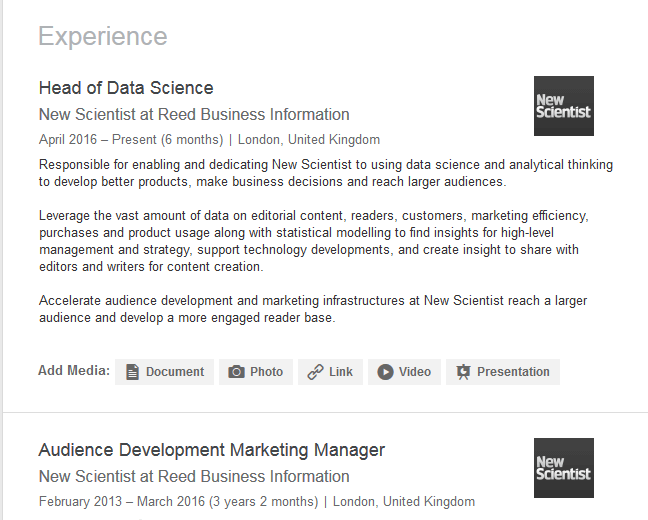
| The future of data and my future career development opportunities are inextricably linked. | My skill set within the marketing team coming from a technical background in science has always been within analytics and insight. Several areas of the DME course focused on awareness of the growth of the Internet of Things, new innovations, and the continued use of more and more data to drive business decision making. | I have specifically crafted my own job role and remit to use data and insight to further enable better decision making and strategy for all of our products (not just the core audience development and subscription activity). As part of this I began a project with the Head of Technology on the review and implementation of our customer data software and communication tools.
|
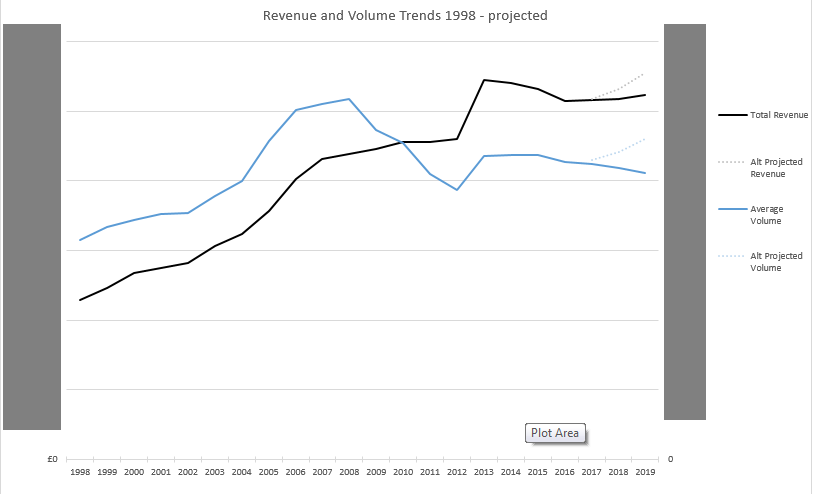
| Measuring business performance – is what we’re doing right? | Portfolio metrics created to monitor all products at their various stages with the Publishing Director, Marketing Director, Commercial Product manager and Editorial content director. | Statistical correlation of multiple years of audience figures indicated that our strategy was correct, our execution was not consistent though. Daily stand ups initiated and targets have been hit. There is an awareness of the need to review this strategy again over time and adapt accordingly.
Portfolio metrics are distributed weekly and updated with new actions, insights and areas for analysis regularly. |
| How can we improve our business metrics? | Lead vs. lag metrics webinar was important in getting me to think about joining up more short term to long term impact metrics. | 3 year revenue projects based on weekly figures were created, as well as price modelling testing formats to take into account acquisition volumes, retention rates by payment method, geographic splits and marketing methods. Calculator formats have been used to allow other stakeholders to scenario model their own assumptions. |
| How can I demonstrate that my actions are having a direct impact on business metrics in the long term? | Embed data driven decision making throughout New Scientist | Met with editorial and other commercial leadership team members to explain how my role could add value to their activity, efficiency and effectiveness. To date, marketing, digital team, news team, feature and event team reviews have been held. Advertising reviews have been scheduled in the diary for the sales team of both recruitment and display propositions in the UK and US.
3 year revenue projections were submitted in May to the Publishing Director and Management Accountant. The forecasting model on which they were built is updated with data on a weekly basis. Upon the introduction of price testing, additional factors were built into the model to take into account new potential volumes and yields based on the current known information.
|


APPENDIX NOTES
Problem solving with lean and agile
Iskikawa diagram for website
- big picture view down
- specifically what is wrong with subscriptions before and after exercise
- Website Problems Ishikawa
- website issues size and solution December 2015 Updated
Future of data – strategy planning
- internet of everything – Mary Meeker
- doom and gloom versus rosy picture – we are usually more cynical; private
- scenario planning
Application to my new role as Head of Data Science

Measuring Business Performance
- Lead indicators vs. lag indicators
- Investment time vs. market maturity
- EBITDA – Earnings Before Interest, Tax, Depreciation and Amoritization

 Kim Karman
You must be logged in to post a comment.